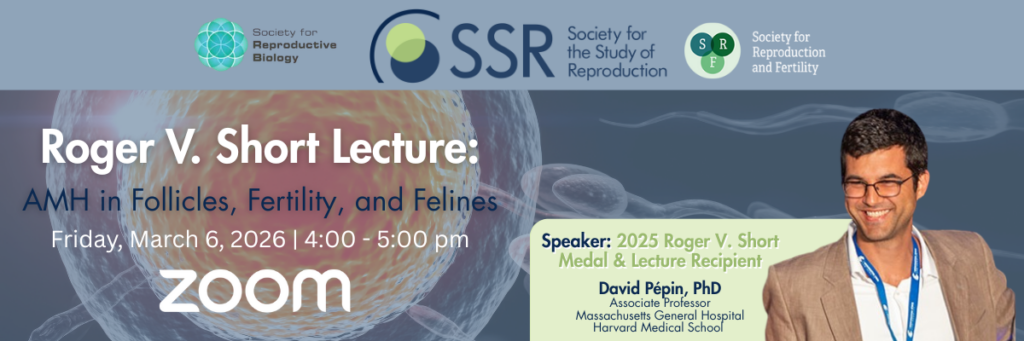
View an illuminating session with David Pépin, PhD, (Associate Professor at Harvard Medical School and 2025 Roger V. Short Medal recipient) as he reveals how Anti-Müllerian Hormone (AMH) is being harnessed to redefine reproductive medicine. Moving beyond traditional methods, Dr. Pépin will discuss his lab’s groundbreaking work in “follicle pausing”—a mechanism that enables innovative approaches to non-hormonal contraception and the protection of ovarian and uterine health during chemotherapy. From pioneering gene therapy in felines to engineering small-molecule agonists for human health, this lecture explores a translational pipeline designed to preserve fertility and improve women’s endocrine health across the lifespan.
Early-life nutrition modulates the development of the reproductive neuroendocrine system. In my webinar, I will discuss how nutrition during early development can program key cellular and molecular alterations in the hypothalamus and how those modifications can impact puberty and subsequent fertility in ruminants.
In this presentation I will be covering the novel pathways in which Kiss1 neurons participate in the bidirectional regulation of energy balance and reproduction. In particular, I will talk about novel transcription factors involved in this regulatory process and offer evidence supporting a role for Kiss1 neurons in the mediation of the reproductive and metabolic role of melanocortins.
In females, the mid-cycle surge in gonadotropin-releasing hormone (GnRH) and luteinizing hormone (LH) secretion triggers ovulation. This neuroendocrine process is mediated by a population of neurons in the preoptic area that produce the neuropeptide kisspeptin and drive the activity of GnRH neurons for the surge. In female rodents, and possibly in other species, the preovulatory surge is timed to precede the onset of activity to ensure that ovulation coincides with sexual behavior. In this presentation, I will focus on the regulation of preoptic area kisspeptin neuron activity by the central circadian clock.
The brain, it makes hormones with zeal.
The control of our gonads is real.
The cells they call candy,
Are certainly dandy.
But what about non-neural glia?