

Meet Dr. Leah Simon
Postdoctoral Fellow, University of Colorado – Anschutz Medical Campus
Check out Leah’s a co-first author paper in PNAS here!
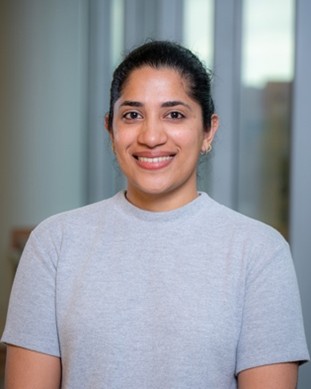
1) Tell us a little about your background—where did you grow up and what institutions did you attend for your undergraduate / graduate degrees, your current position?
I grew up in Dubai, UAE. For my undergraduate studies, I attended the University of Illinois at Chicago, where I earned my bachelor’s degree in Biological Sciences. I then completed my master’s in Reproductive Science and Medicine at Northwestern University, conducting my thesis research in Dr. Francesca Duncan’s lab. Following this, I earned my PhD in Dr. Paula Cohen’s lab at Cornell University. I am currently a postdoctoral research fellow in Dr. Raj Kumar’s lab at CU Anschutz, where I study the effects of re-routed FSH signaling on ovarian aging.
2) What initially got you interested in becoming a scientist?
There wasn’t a single defining moment that led me to pursue science. Instead, it was a series of experiences from undergrad through my master’s and PhD, many of which were not immediately successful, that shaped my perspective. Along the way, I came to appreciate the idea that it’s more about the journey than the destination.
Over time, I realized that I genuinely enjoy the process of asking questions, working through challenges, and discovering something new. I’m really glad I stuck with science, even when it was difficult.
3) How long have you worked in the field of reproduction, and what led you to become a reproductive scientist?
Growing up in the early 2000s in a conservative Indian household in the Middle East meant that reproduction, and really any related topics, were considered extremely taboo. When I wanted to understand what my own body was going through, I didn’t feel comfortable turning to the adults around me. Instead, I turned to encyclopedias and human biology textbooks to learn about reproductive biology. That curiosity turned into a lasting interest in reproductive biology.
During undergrad, I assisted with a study examining the relationship between gestational diabetes and sleep apnea. In my master’s, I studied the effects of age-specific FSH glycoforms on murine folliculogenesis. During my PhD, I investigated the reversible blocking of meiotic prophase I in spermatogenesis as a potential intervention point for male contraception. Altogether, I’ve been in the field for about 10 years.
4) What is your current research focus? Tell us a little bit about health and/or agricultural impact of your work.
My current research focuses on re-routing FSH signaling from its canonical constitutive pathway to a pulsatile pathway, similar to how LH signals, in the context of ovarian aging. Previous work from the Kumar lab has shown that mice engineered to express pulsatile FSH exhibit enhanced ovarian function, including increased ovulation rates and extended reproductive longevity. These findings suggest that the pattern and kinetics of gonadotropin signaling play a critical role in shaping ovarian physiology.
My work aims to understand how this altered signaling impacts the aging ovary. This has important implications for how we think about hormone signaling dynamics, and it may have translational potential. In particular, it could inform new approaches to FSH administration in hormone replacement therapy during menopause or improve outcomes in assisted reproductive technologies (ART).
5) What do you see as the most rewarding or impactful aspects of your work?
The translational potential is definitely the most rewarding aspect for me. I love being able to connect fundamental biology to applications that could directly improve reproductive health.
6) Who is a mentor that changed the way you think about science, and what is the best piece of advice they gave you?
My current mentor, Dr. Raj Kumar, was actually a collaborator on my master’s thesis project. I really admire him, not only as an exceptional scientist, but also for the time and care he invests in mentoring trainees at every level.
He leads by example, staying actively engaged at the bench and deeply involved in the scientific process. While it’s not a single piece of advice, something that has stayed with me is his belief that training the next generation of scientists can make or break the future of science. That’s a mindset I carry with me.
7) What do you enjoy doing outside of the lab? Is there anything your peers would be surprised to learn about you?
I love cross-stitching or embroidery, and if I’m not doing that, I’m usually reading fiction. Recently I’ve been very into fictional retellings of historical or mythological characters.
Something people might be surprised to learn is that I actually started out as a bioengineering major in undergrad before switching to biological sciences. I felt like I wasn’t getting enough biology in my coursework as an engineering major. Also, Calculus III was really hard…