

Meet Dr. Kyle Orwig
Written by Dr. Camilo Pena-Bello (SSR Community & Engagement Committee) for National Infertility Awareness Week.
April 23–29 is the National Infertility Awareness Week. The SSR Community and Engagement Committee is participating in this celebration. For this, Dr. Camilo Pena-Bello (member of the SSR Community and Engagement Committee) interviewed Dr. Kyle Orwig, Professor in the Department of Obstetrics, Gynecology & Reproductive Sciences at the University of Pittsburgh School of Medicine and Director of UPMC Magee Center for Reproduction and Transplantation at Magee-Womens Hospital, Pittsburgh, USA.
What is your current position, and what does it entail?
I am a professor of Obstetrics, Gynecology & Reproductive Sciences at the University of Pittsburgh School of Medicine. A typical tenure-track faculty position in the sciences involves teaching, service and research. At a medical school, the emphasis (expectation from our bosses) leans more toward grant-funded research and less toward teaching and service. In addition to the research laboratory, I direct a clinical center at Magee-Womens Hospital of the University of Pittsburgh that provides fertility preservation options to people who are at risk of infertility due to their diseases or medical treatments.
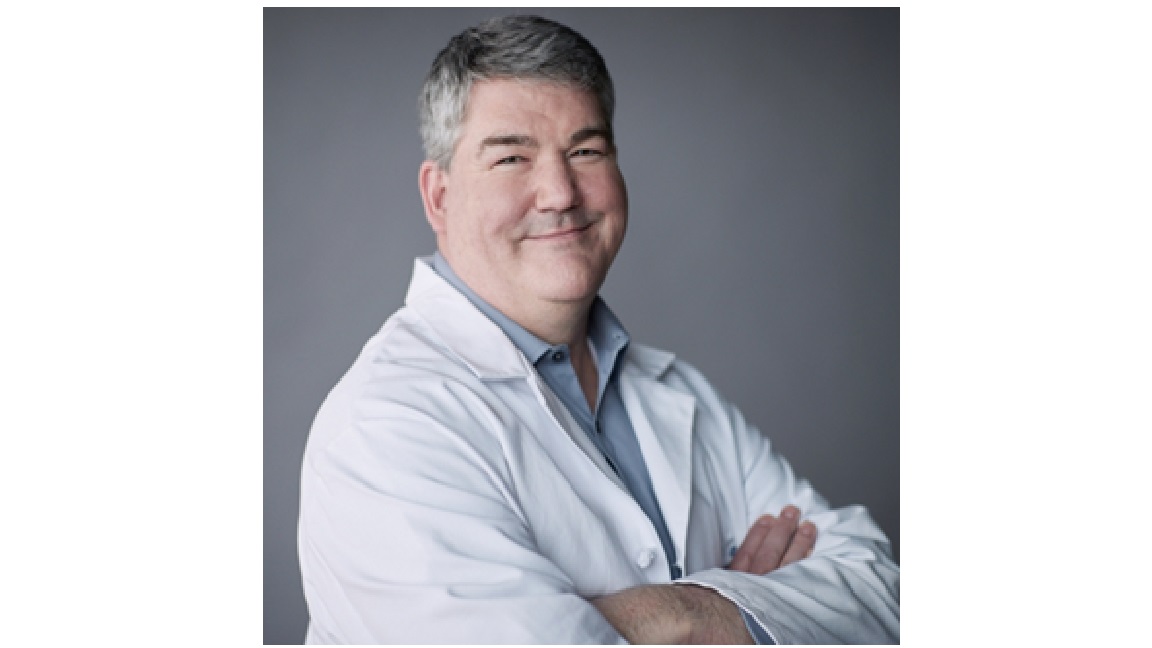
Can you tell us a bit about yourself? Where are you from? What first attracted you to fertility research? and how did you get to be in your current position?
I was born in Portland, Oregon. My undergraduate education was at Whitworth University in Spokane, Washington where I earned a BS in Biology and a BA in Chemistry. Then, I attended Oregon State University for graduate school in the lab of Dr. Fred Stormshak (former President of SSR and Animal Sciences) where I earned a PhDs in Animal Sciences and Biochemistry & Biophysics. This is where my work in reproduction began, studying ovarian function in cows, sheep and pigs. My thesis was on the role of prostaglandins and oxytocin in corpus luteum regression in cows.
I was always intrigued by genes and their functions and by the possibility to manipulate genes that regulate biological functions. I did postdoctoral studies at the University of Kansas Medical Center with Dr. Mike Soares where I learned molecular biology with a specific focus on the role of prolactin-like proteins in the placenta and decidua. We did a lot of promoter bashing to identify elements that regulate gene expression. I don’t think people do that kind of work anymore. In those days, you could do an entire PhD thesis on studying the regulation of a single gene. Also, sanger sequencing was done by running giant gels and manually reading the GATC bands on the gel. It was a pain in the neck.
In 1998, I was recruited to a junior faculty position (really a second postdoc) with Dr. Ralph Brinster at the University of Pennsylvania. Dr. Brinster is a pioneer of mouse embryo culture and mouse transgenesis. He also pioneered methods to transplant stem cells into the testes of infertile males and restore spermatogenesis. 1998 was an important year in stem cell science because that was the year that Dr. Jamie Thomson reported the first derivation of human embryonic stem cells (hESCs). In theory those pluripotent cells could regenerate or repair any cell or tissue type in the body. There were ethical concerns that derivation of hESCs requires the destruction of a human embryo (a potential human life). Those of us working on adult tissue stem cells (e.g., spermatogonial stem cells in the testis) got to ride the wave of the burgeoning stem cell field without many of the ethical challenges associated with hESCs. Several years later, Dr. Shinya Yamanaka reported the derivation of induced pluripotent stem cells (iPSCs) in mice (2006) and in humans (2007) that can theoretically be derived from any cell type in the body and regenerate any tissue or cell type in the body, thus obviating the need for human embryos. There is still a lot of work needed to prove the human iPSCs have equivalent developmental potential to their hESC counterparts and to translate human iPSC-based therapies into clinical practice. Collectively, my experiences in reproduction, animal models, genetics and stem cells established the foundation for my career in academic science. I was recruited to Magee-Womens Research Institute of the University of Pittsburgh in 2003 and advanced through the ranks to full professor and endowed chair in reproductive genetics. Although I consider myself a basic/translational scientist, the University of Pittsburgh/University of Pittsburgh Medical Center is an ideal ecosystem to translate lab bench discoveries into clinical practice. I am the founding director of a clinical center called the UPMC Magee Center for Reproduction and Transplantation at Magee-Womens Hospital, which is right across the street from my research laboratory in Magee-Womens Research Institute
What are the most significant scientific contributions you have made so far?
- Established an infertile monkey model of cancer survivorship to model prepubertal boys who are at risk of infertility due to chemotherapy or radiation treatments for cancer. Prepubertal boys are not yet producing sperm, so they cannot preserve their future fertility by cryopreserving a semen sample. We demonstrated that immature testicular tissues (which contain spermatogonial stem cells) could be frozen, thawed at a later date, and matured to produce sperm using cell-based or tissue-based transplantation procedures.
- Translated spermatogonial stem cell transplantation techniques from mice to nonhuman primates, restoring spermatogenesis in a chemotherapy treated, infertile monkey.
- Reported that immature testicular tissues could be frozen, thawed, transplanted under the skin and matured to produce sperm and a healthy monkey baby named Grady (Graft-derived baby).
- Performed the first spermatogonial stem cell transplant in a human adult survivor of childhood cancer.
These contributions were possible because of the outstanding trainees who have matriculated through the lab over the years. I have had the pleasure of mentoring high school students, college students, graduate students, medical students, postdoctoral fellows, clinical fellows and junior faculty. This is one of the most rewarding parts of the job.
Could you tell us about the Fertility Preservation Program and your experience with it over the years?
Spermatogonial stem cell transplantation and testicular tissue grafting are mature technologies that have been replicated in numerous species, including nonhuman primates, suggesting the potential for application in the human clinic. Others had already demonstrated that ovarian tissues could be frozen, thawed and transplanted in human patients to restore fertility. We reasoned that it would be appropriate to begin cryopreserving gonadal tissues for young patients with the expectation that transplant or other technologies would be available in the future to use their stored tissues for reproduction.
We established the Fertility Preservation Program in Pittsburgh in 2010 to cryopreserve testicular tissues and ovarian tissues for patients who were at risk of infertility due to their diseases or medical treatments. After obtaining regulatory approval, we began cryopreserving gonadal tissues for patients in 2011. Our clinical center has now cryopreserved gonadal tissues for over 2,000 patients from around the world.
It turns out that it is very difficult to establish a gonadal tissue cryopreservation center. Most fertility (IVF) centers do not have the capacity for experimental fertility services and they do not typically treat children. Children’s hospitals do not typically practice reproductive medicine. Therefore, patients and their families are obligated to travel to one of the few centers that provide those services under experimental protocols, which creates a barrier in access to care. To address this challenge, we established a coordinated network of nearly 60 sites around the US that perform the surgical procedures to collect ovarian or testicular tissues. The tissues are then sent to our center where we have the infrastructure and expertise to process and freeze the tissue. This reduces a barrier in access to care for patients and also accelerates our learning curve because we get to learn from all patients recruited through our coordinated network of centers rather than just our local patients.
Our patients are our partners in research. Many donate a portion of their tissue to research so we can use their own tissues to discover the impact of diseases or medical treatments on gonadal function and develop next generation reproductive technologies. Gonadal tissue transplantation won’t be appropriate or safe for all patients, so the research lab is working on ways to mature gonadal tissues or cells to produce gametes outside the body in culture or in animal hosts.
What are the biggest unanswered questions in infertility research today?
Can patient iPSCs be used to produce eggs, sperm and offspring? This was achieved in mice over ten years ago but hasn’t been completely translated to any other species. This “in vitro gametogenesis” technology would open doors to reproduction for people who have intractable infertility diagnoses that cannot be treated with today’s technologies.
Is there a path to the clinic for gene therapies to treat infertility? Half of infertility is due to genetic causes, but there is limited knowledge about the genes and treatment options are limited. Affordable whole genome or whole exome sequencing makes it increasingly possible to discover genetic causes of infertility and develop targeted therapies. Gene therapy in and around the germline has important ethical, legal and social implications that must be considered in parallel with technology development.
- What words of inspiration would you like to share with the next generation of scientists?
I realize as I am reading through my responses that human patients play a star role. It is true that patients and their stories inspire the work that we do, but work in the lab is more fundamental in nature, discovering how the process of spermatogenesis and oogenesis is conserved and different across species and testing new reproductive technologies using human, animal and cell culture models. It is an exciting time to be a reproductive scientist! There are developing technologies that I believe will transform the future of reproductive medicine. My advice to the next generation of reproductive scientists is to 1) Work hard, be conscientious, and be honest; 2) Tell a story that is interesting and true; 3) Remember the scientific method, design good experiments and replicate; 4) Expect the unexpected and 5) Be prepared to turn lemons into lemonade.