

Meet Dr. Dilara Anbarci
Postdoctoral Fellow, University of Michigan
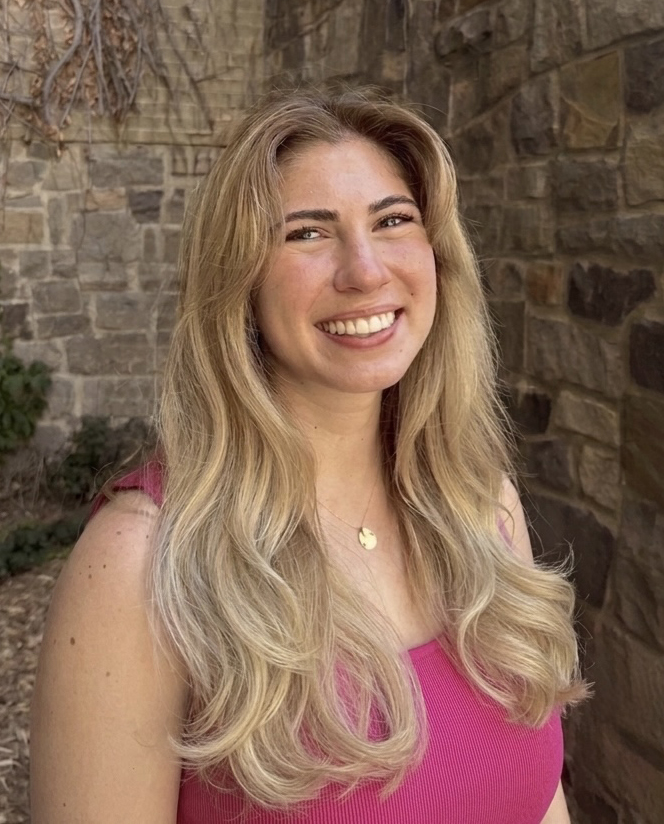
Congratulations to Dilara for securing her Lalor Foundation Postdoctoral Fellowship! Check out her recent first-author paper in eLife. Also check out the Developmental Cell paper in which Dilara is a co-author (click here for the paper).
- Tell us a little about your background—where did you grow up and what institutions did you attend for your undergraduate / graduate degrees, your current position?
My Journey: I have a bit of a global footprint! I was born in the U.S. and then moved to Australia at 14 and then moved back to the states at 24 to do my PhD.
Education: I completed my undergraduate and Honours research degrees in Australia at Monash University, which included undergraduate research at the Walter and Eliza Hall Institute. I then returned to the U.S. to complete my PhD at Duke University in the Department of Cell Biology with Dr. Blanche Capel.
Current Position: I am currently a Lalor Foundation Postdoctoral Fellow in the Hammoud Lab at the University of Michigan, specializing in chromatin biology, epigenetics, and reproductive genetics.
- What initially got you interested in becoming a scientist?
It was a mix of innate curiosity and a sudden spark of undergraduate competitiveness. Growing up, I was the kid who constantly questioned everything – a habit my dad accidentally enabled by handing me a copy of “Philosophy for Kids”in the fifth grade. However, the definitive push into the lab happened during my first year of university. My biology lab partner excitedly told me about a summer research internship she had landed. My immediate internal reaction was, “If she can do it, why can’t I?” I ended up missing that specific application deadline, but refusing to accept defeat, I cold-emailed a Dr Andreas Strasser at the Waler and Eliza Hall Institute and begged for a spot. From the moment I stepped onto the clinic-basic science boundary, I was hooked.
- How long have you worked in the field of reproduction, and what led you to become a reproductive scientist?
I have been in biomedical research for over 12 years, spending the last 10 years deeply embedded in reproductive biology. I initially pivoted to this field during my senior year of undergrad when I became passionate about maternal and neonatal health, which led to an Honours project investigating delayed umbilical cord interventions for at-risk births using a sheep model.
While that work was highly physiological, I found myself completely captivated by the underlying cell biology. This led to a PhD focusing on the Rete Ovarii – a complex ovarian structure that had been completely dismissed as a “vestigial remnant” since the 1970s. Our resulting publication in eLife fundamentally challenged this narrative by proving that this structure is actually a functional, hormone-sensing “antenna” for the ovary. My PhD work made me realize how much of female reproductive biology remains a mystery, cementing my desire to spend my career uncovering the molecular blueprints of fertility.
- What is your current research focus? Tell us a little bit about health and or agricultural impact of your work.
The Big Question: My current postdoctoral research targets a deceptively simple question: What makes a good egg, a good egg?
The Science: Supported by a Lalor Foundation Postdoctoral Fellowship, my work builds directly on our team’s recent discovery published in Developmental Cell. In that study, we revealed how the zygote relies on maternal stores (such as maternal CENP- A and CENP-C) to restore centromere symmetry and ensure proper chromosome segregation at fertilization. My current research explores the downstream functional consequences of these maternal contributions, investigating how natural variations in maternal centromeric machinery serve as a critical determinant of oocyte quality and an active safeguard against devastating mitotic errors during early embryogenesis.
The Impact: From a clinical and human health perspective, this work bridges the gap between basic chromatin biology and reproductive medicine. By defining the exact epigenetic signatures of a competent gamete, we are laying the groundwork to establish entirely new, non-invasive molecular metrics for embryo selection in clinical assisted reproduction (IVF), ultimately helping to improve pregnancy success rates and lower embryonic loss.
- What do you see as the most rewarding or impactful aspects of your work?
The most rewarding aspect is the opportunity to revisit overlooked biological questions and see that work change how the scientific community thinks. There is an incredible thrill in taking a structure or a mechanism that textbook literature has minimized and utilizing modern, high-resolution genomics to completely rewrite the narrative. This has been a defining thread of my career: first during my PhD, where our eLife paper proved that the long-ignored Rete Ovarii is a vital player in female fertility; and most recently in my postdoc, where our paper in Developmental Cell demonstrated that maternal stores are actively responsible for rescuing zygotic centromere symmetry to prevent chromosome segregation errors.
On a human level, the most impactful aspect is mentorship. Creating an open laboratory environment where younger students – especially those from diverse backgrounds – feel completely safe to challenge existing ideas and confidently ask “why?” is just as important to me as the discoveries we print on paper.
- Who is a mentor that changed the way you think about science, and what is the best piece of advice they gave you?
My PhD mentor, Dr. Blanche Capel, completely redefined how I view scientific leadership and lab culture. When I first asked her how she selected lab members, she shared a piece of philosophy that completely shifted my perspective: she chose individuals not based solely on their scientific credentials, but on their ability to create a welcoming space for discussing both life and science. Blanche firmly believed that inclusion and diversity must start from the top, and she constantly led by action.
Most importantly, she never let institutional setbacks shake my scientific confidence. When I faced the heavy disappointment of having my F31 fellowship applications go “not discussed” not once, but twice, she refused to let me get discouraged. Instead, she reframed the setback entirely, telling me: “We’ll show them how important the Rete is when we publish the paper.” And as always, she was entirely right – our subsequent work on the Rete Ovarii published in elife successfully challenged long-standing reproductive dogmas.
- What do you enjoy doing outside of the lab? Is there anything your peers would be surprised to learn about you?
Outside of the lab, I’m trying to be an endurance athlete – I’m currently training for both a triathlon and a marathon! Whether I am running, biking, or swimming, I use these workouts as a vital way to ease my mind during times of high stress. Pulling myself completely away from the bench gives my brain the passive space it needs to untangle complex biological problems.