

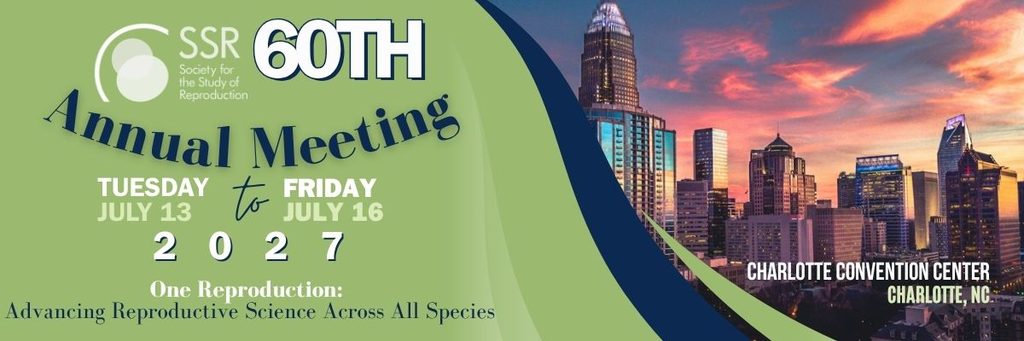
SSR 60th Annual Meeting
The SSR 60th Annual Meeting will be held in Charlotte, NC, from Tuesday, July 13, to Friday, July 16. This premier event, themed “One Reproduction: Advancing Reproductive Science Across All Species,” will bring together leading experts, researchers, and industry professionals dedicated to advancing reproductive science.
Jump To:
- test
Plenary Speakers
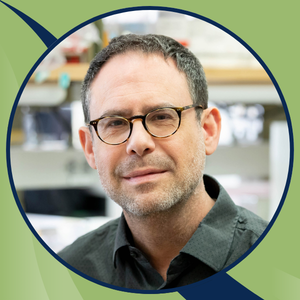
Adrian Erlebacher, MD, PhD
Professor, Department of Laboratory Medicine
Director, Biomedical Sciences Graduate Training Program
University of California San Francisco
Adrian Erlebacher is a Professor of Laboratory Medicine at the University of California San Francisco (UCSF). He received his B.S. degree from Yale University, and his M.D. and Ph.D. degrees from UCSF. Dr. Erlebacher started his lab at the NYU School of Medicine in 2006, and then moved back to UCSF in 2016. He is the director of the UCSF Biomedical Sciences graduate program and director of the UCSF National Center for Translational Research in Reproduction and Infertility. His laboratory investigates fundamental questions in reproductive immunology and biology, including mechanisms of fetomaternal tolerance and the immunological and epigenetic pathways that regulate parturition. His work has implications for mechanisms of peripheral immune tolerance induction and the causes of early pregnancy loss, preterm labor, and other disorders of maternal/fetal health.
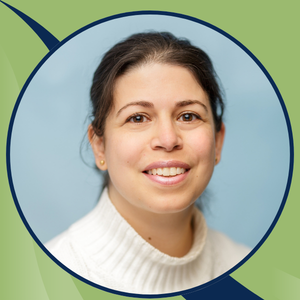
Alexandra Naba, PhD
Associate Professor
Department of Physiology and Biophysics
University of Illinois, Chicago
Alexandra Naba is an Associate Professor in the Department of Physiology and Biophysics at the University of Illinois Chicago and a member of the University of Illinois Cancer Center.
Alexandra is an internationally recognized leader in the field of extracellular matrix biology (ECM).
She received her Ph.D. from the Curie Institute in Paris and completed her postdoctoral training under the mentorship of Dr. Richard Hynes at MIT. There, she developed the first proteomic and bioinformatic pipelines to comprehensively characterize the ECM composition of tissues, thereby defining the concept of “matrisome” and pioneering the field of ECM proteomics.
In 2016, Alexandra established the Naba Lab for ECM Research in the Department of Physiology and Biophysics at UIC. Combining cutting-edge proteomics and bioinformatics with functional approaches, her team focuses on elucidating the roles of the ECM in development, health, and disease, with an emphasis on cancer. Alexandra is also the founder of the Matrisome Portal (https://matrisome.org), a web portal to disseminate methods, tools, and reagents and accelerate ECM research.
Alexandra has published over 70 peer-reviewed publications. She has received numerous prestigious awards, including the Herb Tabor Junior Investigator Award from the American Society for Biochemistry and Molecular Biology (ASBMB), the Junior Investigator Award from the American Society for Matrix Biology (ASMB), and the Rupert Timpl Award from the International Society for Matrix Biology (ISMB). More recently, she received the 2024 UIC College of Medicine Departmental Faculty Award.
Alexandra is a caring mentor to her trainees. In 2020, she received the Philip L. Hawley Distinguished Faculty Award, presented by the students of the UIC Department of Physiology and Biophysics to faculty embodying “supportiveness, enthusiasm, and sincerity”. In 2024, Alexandra received the UIC Honors College Capstone Supervisor of the Year award, an annual honor given to a faculty member for their outstanding mentorship.
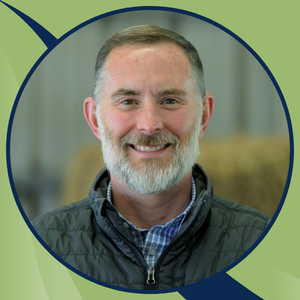
Jon M. Oatley, PhD
Associate Dean for Research
Regents Professor, School of Molecular Biosciences
Director, Resilient Livestock Program
College of Veterinary Medicine
Washington State University
Jon Michael Oatley is Director of the Resilient Livestock Program at Washington State University and a tenured Regents Professor in the School of Molecular Biosciences. He is an internationally recognized leader in reproductive biology and functional genomics whose research has advanced the scientific foundations and practical application of genome editing in livestock, with significant implications for agricultural sustainability, food security, and animal health. Dr. Oatley’s scholarship integrates reproductive biology, genome engineering, and livestock production systems to enable precise, heritable genetic improvement in food animals. His seminal contributions to germline stem cell biology and gene editing strategies have established scalable approaches for trait development and transmission across species. As Director of the Resilient Livestock Program, he leads a fully integrated research ecosystem spanning discovery through deployment. Under his leadership, the program has achieved unprecedented technical capability and is the only entity worldwide to demonstrate gene editing and germline transmission in rodents and all major livestock species, including pigs, cattle, sheep, and goats. Dr. Oatley has authored more than 95 peer reviewed publications, secured over $20 million in competitive research funding, delivered more than 160 invited presentations, and developed an extensive international patent portfolio. He has mentored more than 50 undergraduate, graduate, and postdoctoral trainees who now contribute to academia, industry, and public service. Beyond his research accomplishments, Dr. Oatley has played a significant role in national science policy and biotechnology governance. He has advised the National Academies of Sciences, Engineering, and Medicine, the National Security Commission on Emerging Biotechnology, and the U.S. Food and Drug Administration on genome editing in food animals, participated in national biotechnology policy initiatives, and testified before the U.S. Congress. His contributions have been recognized through election as an Honorary Fellow of the Roslin Institute, induction into the Washington State Academy of Sciences, and multiple awards for research excellence
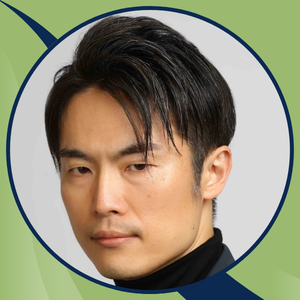
Kotaro Sasaki, MD, PhD
Associate Dean for Research
Regents Professor, School of Molecular Biosciences
Director, Resilient Livestock Program
College of Veterinary Medicine
Washington State University
Kotaro Sasaki is the Richard King Mellon Associate Professor of Biomedical Sciences at the University of Pennsylvania School of Veterinary Medicine, with a joint appointment in Pathology and Laboratory Medicine at the Perelman School of Medicine. He is a board-certified anatomic pathologist and completed postdoctoral training with Mitinori Saitou at Kyoto University.
Dr. Sasaki’s research focuses on reconstructing human reproductive and endocrine development using pluripotent stem cells. His laboratory has identified the nascent amnion as the origin of the primate germline, reconstituted key stages of human male germ cell development from pluripotent stem cells, defined the developmental origins of human gonadal and adrenal lineages, and reconstructed the developing human adrenal cortex in vitro. These pioneering discoveries have established unprecedented capabilities to recreate human reproductive and endocrine development, opening new avenues for understanding and ultimately treating infertility and endocrine disease.
His research has been published in leading journals, including Nature, Science, Cell Stem Cell, and Developmental Cell, and supported by the NIH, Open Philanthropy, HRFF, National Adrenal Diseases Foundation, and the Marda and Quinlivan Family Foundations.
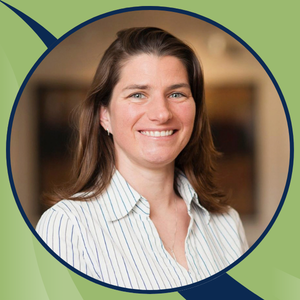
Suzannah A Williams, PhD
Associate Professor & Senior Research Fellow
Nuffield Department of Women’s & Reproductive Health
University of Oxford
Prof. Suzannah A Williams leads a multi-disciplinary group investigating ovarian function in health and disease, and the effect of aging at the University of Oxford. The overarching aim is to generate new fertility preservation techniques by developing innovative technologies for women and endangered species. She leads the Ovarian Research Program for the Oxford Fertility Preservation Service. She founded the Rhino Fertility Project at Oxford in 2019 and the Poo Zoo in 2024. She also has a keen interest in scientific communication, with her Conversation articles having over half a million reads.