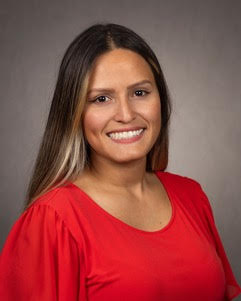

Meet Dr. Daniella Heredia Castañeda
Written by Dr. Maria Gracia Gervasi (SSR Diversity Committee) in honor of the National Hispanic Heritage Month.
The National Hispanic Heritage Month is annually celebrated from September 15 to October 15 in the United States to recognize the contributions and influence of Latinx to the history, culture, and achievements of the United States. In celebration of Hispanic Heritage Month, Community and Engagement Committee member Drs. Maria Gracia Gervasi and Angela Gonella Diaz sat down with Dr. Daniella Heredia Castañeda from the Animal Sciences Department, IFAS-NFREC at the University of Florida.
MGG: What is your current position, and what does it entail?
DHC: My current position is as a postdoctoral fellow at the University of Florida, where I conduct research in the field of in vitro fertilization (IVF), with a focus on bovine embryology. I am learning to design and execute experiments to evaluate the effects of different embryokines in the bovine embryo culture medium.
A key part of my research involves transferring these embryos to beef cattle to determine whether specific embryokines in the culture medium can improve pregnancy rates. This work combines laboratory research with practical application, with the ultimate goal of enhancing reproductive success in livestock. In addition, I am responsible for analyzing data, preparing manuscripts for peer-reviewed publication, and presenting findings at scientific conferences.
MGG: Can you tell us a bit about yourself? Where are you from? What first attracted you to the world of science, and how did you reach your current position?
DHC: I am originally from Bogotá, Colombia, and a first-generation college graduate. While my parents did not have the opportunity to attend college, their hard work and support made it possible for me to pursue higher education. My journey into science began during my final year of undergraduate studies in Animal Science at the Universidad de La Salle. I came to the University of Florida for an internship with Dr. Luiz Ferraretto, which was my first exposure to research and truly sparked my interest in science.
After returning to Colombia, I met my future master’s and Ph.D. advisor, Dr. Ángela Gonella-Díaz. Under her mentorship, I pursued graduate studies, completing my master’s in 2021 and my Ph.D. in 2025. As I finished my doctoral work, I knew I wanted to continue building on my skills in reproductive science. I have always been fascinated by in vitro fertilization (IVF), so I reached out to a member of my committee, Dr. Peter Hansen, to inquire about a postdoctoral opportunity in his lab.
My career has been built on a foundation of strong mentors and collaborators. Each step, from my initial internship to my current position, has been shaped by the connections I’ve made and the people who have supported my academic and professional growth.
MGG: What are you most excited about this year?
DHC: This year, I am most excited about acquiring new skills in the reproductive field. I see it as an important time to explore my future career path and to help me decide whether I want to continue in academia or pursue a role in industry.
MGG: In what ways has your heritage influenced your perspective or career path?
DHC: My heritage has influenced my career path in several important ways. On a personal level, Colombians are known for being warm and friendly, and I believe this has helped me build strong professional networks. Most of the opportunities I have had, including my current position, have come through the support of mentors and peers, and I am very grateful for those relationships.
Beyond networking, my background has also given me an international perspective on challenges in animal science. My time in the U.S. has shown me that solutions effective in one country may not necessarily work in another, and vice versa. This has motivated me to focus my research on problems with a global impact, creating work that can be applied across different countries and contexts.
MGG: What words of inspiration would you like to share with the next generation of scientists, especially those from diverse backgrounds?
DHC: My biggest advice comes from my own mentor, who always used to tell me: “The sky is the limit.”
One of the things I’ve come to appreciate most about science is the incredible diversity you find in the community. You get to meet and work with people from all over the world. Take the time to learn from those with different backgrounds and cultures, as it will not only broaden your mind but also truly change how you see things.
My final piece of advice is simple: dream big, and don’t be afraid to try. It’s always better to take a chance than to look back and wish you had. exists within underrepresented minority populations, and I feel I can serve as a role model for trainees in this environment. The idiom “lead by example” has always been a major driving force in my life.n fun, exciting, and intellectually stimulating. Keeping that spirit alive is key to a long-term career.