

Meet Dr. Ashley Hyde
Congratulations to Ashley for securing her CIHR Canada Impact + Research Training Award, which is a very prestigious postdoctoral fellowship!
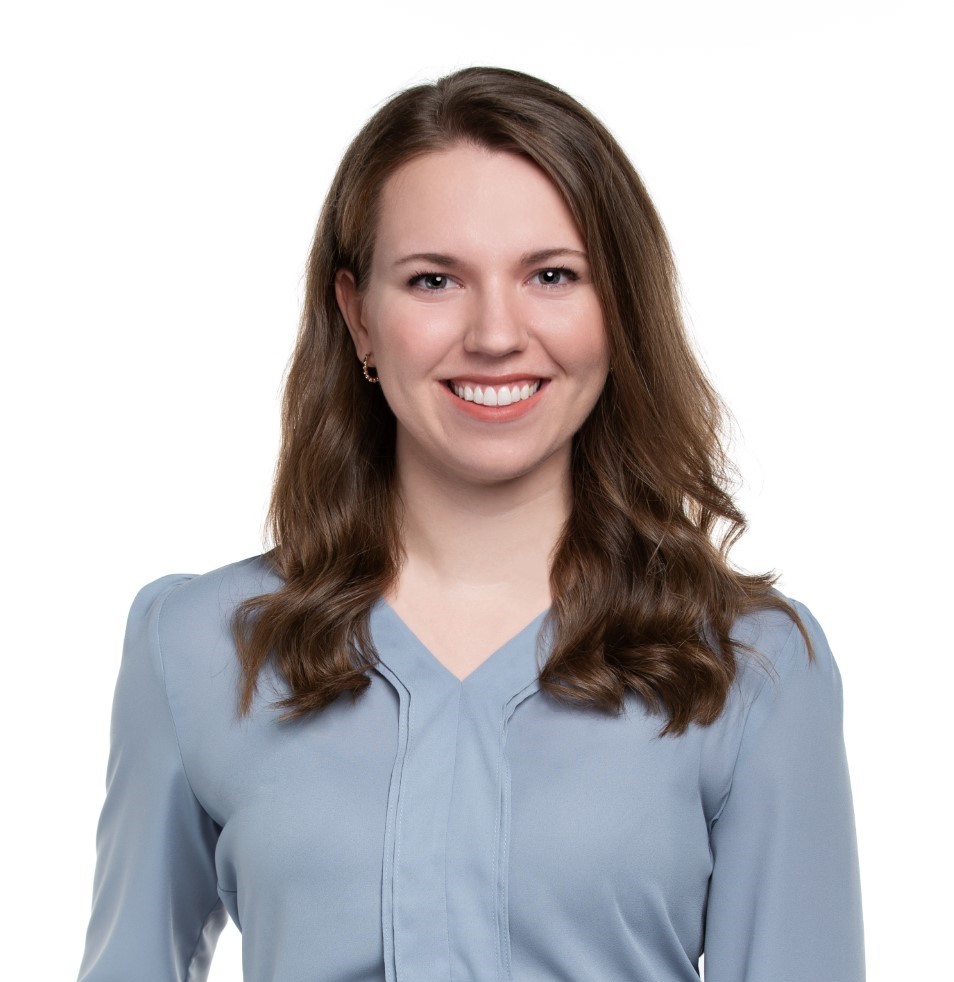
Trainee Spotlight questions:
- Tell us a little about your background—where did you grow up and what institutions did you attend for your undergraduate/graduate degrees, your current position?
I was born and raised in Kansas City, Missouri. In 2020, I completed my Bachelor of Science at Truman State University. Earlier this year, I earned my PhD in Biomedical Sciences in Dr. Angela Odle’s lab at the University of Arkansas for Medical Sciences (UAMS), where I studied cyclic regulation of luteinizing hormone secretion in mice.
I recently joined Dr. Daniel Bernard’s lab at McGill University, where I am currently a CIHR Canada Impact + Research Training Award (CIRTA) Postdoctoral Fellow. My research focuses on uncovering novel regulatory mechanisms of follicle-stimulating hormone (FSH) synthesis.
- What initially got you interested in becoming a scientist?
During my childhood, my family spent a lot of time at the public library, which hosted some amazing science programs in collaboration with local colleges and the Kansas City Zoo. This was probably what first sparked my interest in science. When I was in high school, I became very interested in environmental science, which led me to pursue an undergraduate degree in biology. I initially wanted to be an ecologist.
- How long have you worked in the field of reproduction, and what led you to become a reproductive scientist?
As an undergraduate, I worked in an ornithology research lab investigating the impact of temperature variation during the nestling stage on sexual development in Eastern Bluebirds. Around this time, I was taking cell and cancer biology coursework and became fascinated with cell signaling. This led me to shift my focus from ecology to biomedical sciences. During my PhD, I studied reproductive neuroendocrinology and absolutely loved it. I’m very excited to be continuing in this field as a postdoc.
- What is your current research focus? Tell us a little bit about health and or agricultural impact of your work.
The Bernard lab previously found that the transcription factor, GATA2, regulates FSH synthesis in a sex-specific manner. My current research builds on this finding, investigating potential regulatory mechanisms underlying sex differences in FSH production. I am also studying the role(s) of other transcription factors expressed in pituitary gonadotropes on reproductive development and function.
As basic science researchers, our work helps establish how the reproductive axis functions on a molecular level. Identification of novel mechanisms regulating FSH activity in different physiological conditions (e.g., sex, stage of development, etc.) may provide useful insight into processes such as puberty, fertility, and menopause.
- What do you see as the most rewarding or impactful aspects of your work?
For me, the most rewarding aspect of the work is finding out something new about a biological process. No matter how small, it’s always exciting to connect another piece of the puzzle.
- Who is a mentor that changed the way you think about science, and what is the best piece of advice they gave you?
I met my current mentor, Dr. Daniel Bernard, through SSR several years ago. Something he says that has always resonated with me is that we shouldn’t ‘hope’, ‘believe’, or ‘want’ in the lab, because these attitudes lead to bias. After this, he usually adds, “the data are what they are, and we don’t get upset.” I try to incorporate this mindset into how I think and speak about research. As scientists who are passionate about our work, it can be easy to hope for certain results or feel dejected when a prediction doesn’t pan out. I think it’s valuable to remain analytical throughout, regardless of outcome, to avoid both subconscious bias and emotional fatigue.
- What do you enjoy doing outside of the lab? Is there anything your peers would be surprised to learn about you?
When I’m not in the lab, I spend a lot of time outside with my dog. I love being in nature. This may be surprising because I grew up in a land-locked region of the U.S., but my favorite feeling in the world is swimming in the ocean. Nothing makes me feel more at peace.