

Meet Dr. Nicolas Plachta
Written by Dr. Camilo Pena-Bello (SSR Community and Engagement Committee) in honor of the National Hispanic Heritage Month
The National Hispanic Heritage Month is annually celebrated from September 15 to October 15 in the United States to recognize the contributions and influence of Latinx to the history, culture, and achievements of the United States. In celebration of Hispanic Heritage Month, Community and Engagement Committee member Dr. Camilo Pena-Bello interviewed Dr. Nicolas Plachta, William Richard Gordon President’s Distinguished Professor in Genetics, in the Department of Cell and Developmental Biology at the University of Pennsylvania, Philadelphia, USA.
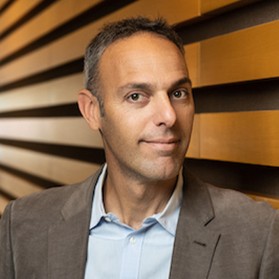
- What is your current position, and what does it entail?
I am a professor and lead a research lab at the Perelman School of Medicine of the University of Pennsylvania.
- Can you tell us a bit about yourself? Where are you from? What first attracted you to reproductive biology research? and how did you get to be in your current position?
I am originally from Argentina but have trained across the globe. I did my undergraduate studies in biology at the University of Buenos Aires and University of Tel Aviv, PhD in neuroscience at the University of Basel (Switzerland), and postdoc in biological imaging at Caltech. After my training years, I started my lab at EMBL Australia based at Monash University (Australia) and then moved to ASTAR in Singapore, and finally to the University of Pennsylvania.
- What is the focus of your research program?
My lab has been pioneering the use of imaging approaches to study early mammalian development. I started this work when I joined the lab of Scott Fraser for my postdoc. The Fraser lab was well known for introducing live imaging approaches to study embryo development, but at that time mammalian embryos had not been explored much. My postdoc colleagues and other labs were doing beautiful work in non-mammalian embryos like zebrafish, fruit flies or frog, so my goal became to apply similar approaches to mammalian embryos, using the mouse as model organism. It turned out that mouse embryos were a fantastic system to do cell biology work, particularly during the preimplantation stages. Our research since then has been focusing on discovering new mechanism, cellular structures and physical forces driving key events like cell differentiation, embryo patterning and morphogenesis in intact-developing mouse and human embryos.
- What are the most significant scientific contributions you have made so far?
Applying imaging in live embryos has allowed us to transform static pictures of development into much more dynamic models. By seeing how cells behave and interact with each other in real time, we found new mechanisms of cell fate determination that drive the segregation of the first mammalian cell lineages (the pluripotent ICM and trophectoderm). We also uncovered new cellular structures crucial for embryo development, like long cellular protrusions and intracellular microtubule bridges that hold embryonic cells together, and specific structures formed by actin or keratin filaments that drive embryo morphogenesis. More recently, we performed some of the first high-resolution studies of embryonic development in human embryos, and uncovered cytoskeletal mechanisms crucial to prevent abnormalities like mitotic errors and aneuploidy. In the last year we have been pushing our imaging approach to capture the events driving fertilization. This has been showing us how sperm behavior is tightly coordinated by changes within the oocyte, right after sperm entry, in both mouse and human.
- What do you see as the future for research in reproductive biology?
I apologize but I am not good at making predictions. Future research directions in reproductive biology will rely primarily on unexpected paradigm-shifting findings, or the development of new technologies.
- Are there ways in which you think your heritage has affected your perspective or career trajectory?
Growing up in Argentina was a great advantage as it offers an excellent public education system, particularly at the university-level, and allows everyone to study any career at public and free universities (which rank among the best in Latin-America). Students in Argentina don’t need to take crazy student loans, and they can sign up for any studies they are interested in. That’s a great privilege as it gives everyone a fair chance to study what they find most interesting at the time. Some people only develop a particular interest in science or other career paths late (that was my case), so I strongly support keeping all career paths open for young people. Also, having trained in many different countries and institutions was incredibly enriching and helped me to learn what works and doesn’t work across various educational and research environments.
- What words of inspiration would you like to share with the future generation of scientists, especially those coming from diverse backgrounds?
I can probably offer two humble advice to younger scientists, from any background: The first is to not expect to necessarily come up with a great hypothesis or idea for a project. Just start working on something people aren’t looking at, and eventually new things will be discovered. The second advice is to put the phone away (it helps creativity and avoiding crowd behavior).